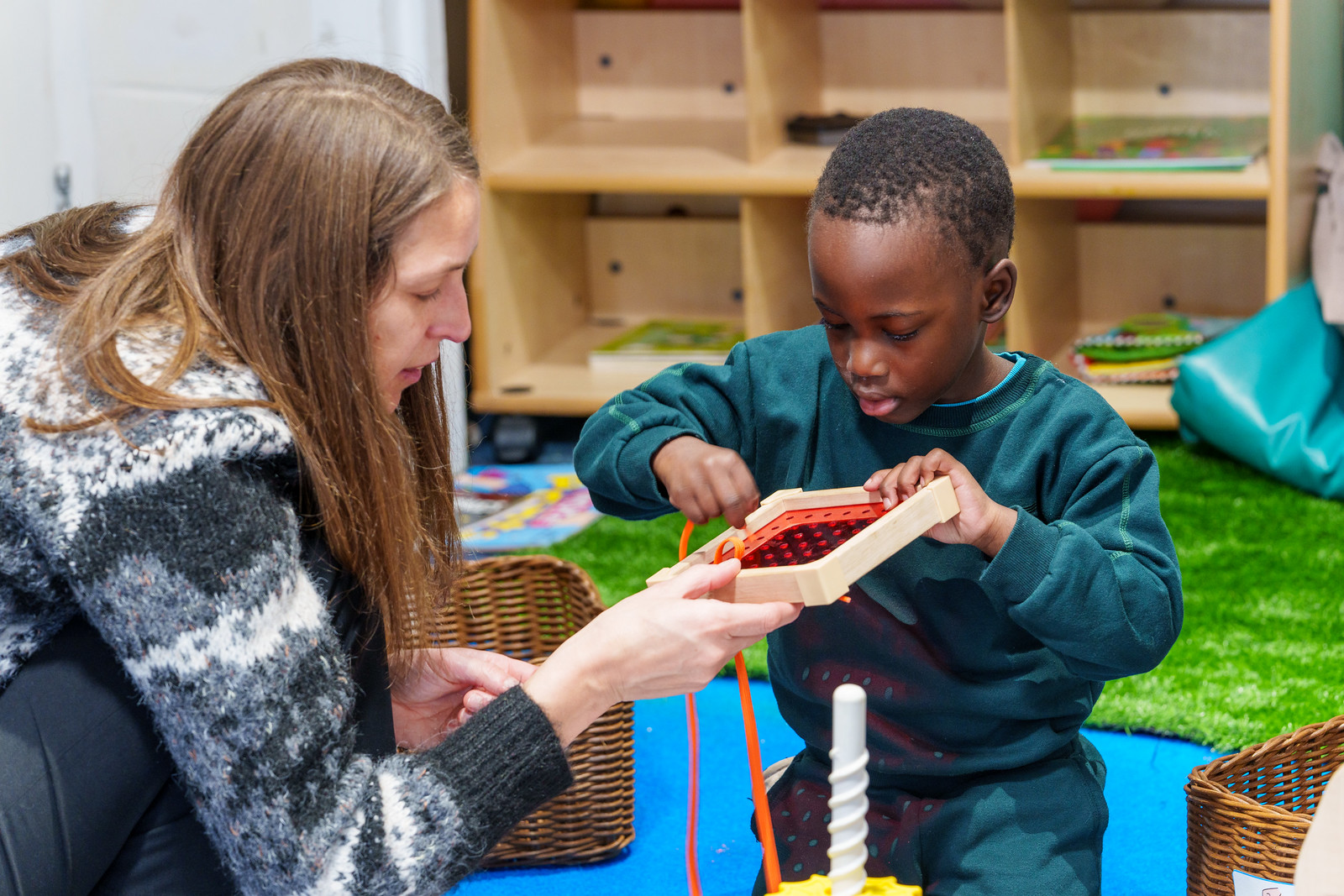
Establishing an environment in which children feel welcomed, safe and like they belong is vital to creating provision which meets the needs of the many not just the few. We know that many strategies and adjustments we make for children with Special Educational Needs and Disabilities (SEND) can support all children and can enhance the learning of those with and without emerging or identified needs. Therefore, creating inclusive provision in the early years is key to providing opportunities for learning and development for all children.
Why it matters
For all children the environment they learn and grow in can shape their sense of belonging and their aspirations for the future. It’s not just about physical space—it’s about the attitudes, ethos, and values that surround them. When educators and peers embrace inclusion, it sends a powerful message: every child is valued, accepted, and celebrated for who they are.
Supporting inclusion while meeting a child’s needs has a profound impact on their mental health and wellbeing. It shifts the focus from trying to help the child to fit the environment and instead adapting the environment to meet the child’s needs. This mindset opens up possibilities, helping children feel seen and supported rather than isolated or misunderstood.
A whole setting approach
Developing your inclusive provision is most impactful when the whole setting is working toward the same goal. Having the same expectations, attitudes and practice of inclusion will ensure that it becomes embedded every day in the setting. Ensuring all team understand the expectations for the environment and curriculum when in comes to inclusion will support you in working towards the same goals.
- Inclusive Ethos and Leadership
- Leaders champion inclusion as a core value.
- Inclusion is embedded in the setting’s vision, policies, and daily routines.
- Staff are empowered to reflect on and improve inclusive practices.
- Staff Training and Development
- Regular CPD on inclusive pedagogy, SEND, cultural competence, and trauma-informed care.
- Staff are confident in identifying and supporting diverse needs, working together to share knowledge, strategies and ideas.
- Peer support and reflective practice are encouraged, this may be through informal discussions or one-to-one conversations.
- Environment and Resources
- Spaces are physically accessible and sensory-friendly.
- Resources reflect diverse cultures, languages, and abilities.
- Quiet areas and flexible spaces support emotional regulation and different play styles.
- Curriculum and Pedagogy
- The EYFS framework is used flexibly to meet individual needs.
- Activities and experiences are adapted so that all children have the opportunity to participate and engage.
- Stories, songs, and play materials represent a wide range of identities and experiences.
- Family and Community Engagement
- Families are welcomed as partners in learning.
- Communication is inclusive (e.g., translated materials, visual aids).
- Community links enrich the setting and promote belonging.
A Framework for Change
Reflecting on our practice is essential as it enables us to grow, adapt and create more inclusive and responsive environments for the children within our care. It can help us to identify what works well in our settings and can enhance learning for all children. Vitally, it can also highlight how some assumptions, biases or routines may unintentionally exclude children. By uncovering these blind spots we can make adjustments and adaptions to remove these barriers and give every child equal access to learning in a way which is right for them.
Reflecting on your setting may happen in many different ways, you may focus on one question at a time or utilise one-to-one discussions with your team members to gain insight from people across the different roles of your organisation. Creating truly inclusive provision won’t happen overnight, or through asking one golden question of yourself or your team, but by regularly asking the right questions, you can keep inclusion at the forefront of everybody’s minds and make conscious choices to improve your practice.
Asking one reflective question a day can be a powerful way of developing your knowledge and practice as an educator.
*What challenging behaviour did I face today? How did my response support the child? Could I have responded differently?
*How did I meet a child’s emotional and developmental needs today? How could I have approached it differently to achieve better outcomes
*Was my language inclusive and affirming? What alternative language could I have used?
These reflections allow us to notice patterns, behaviours and subtle cues that we may have missed in the moment.
Consider your actions and those of the team around you and establish what you wish to reinforce or change about your practice tomorrow and in the days ahead.
Using a framework of reflective questions regularly, will support you in developing a consistent whole setting approach to inclusion. Focusing you to cover all areas of inclusion and enabling all team members to understand where you are on your reflective journey to inclusion.
Dingley’s Promise have developed a reflection framework to support whole setting inclusion, ensuring continual and honest reflection and adaptation towards inclusion and keeping inclusive practice, ethos and values at the heart of practice.
The framework is designed to highlight key questions to support the embedding strong inclusive practice across your provision, including through your leadership, environments, educators and transition processes. Visit www.dingley.org.uk/reflectiveframework to access our reflective framework and other Dingley’s Promise resources.
Meggie Fisher, Head of Quality for Dingley’s Promise