Tag: Highlight

  • Early Years Engagement Events

    Early Years Engagement Events

    Dingley’s Promise is inviting parents of children with SEND under 8 to share their early years experiences and help shape national policy.

    Join us for a face-to-face engagement event, exploring the government’s new SEND proposals and feeding back directly into the consultation.

    Your voice matters! Places are limited, so sign up today. Learn more about the dates and locations here.

    If you can’t attend, you can still have your say through the national consultation: https://www.gov.uk/government/consultations/send-reform-putting-children-and-young-people-first

  • Creating an environment to nurture belonging

    Creating an environment to nurture belonging

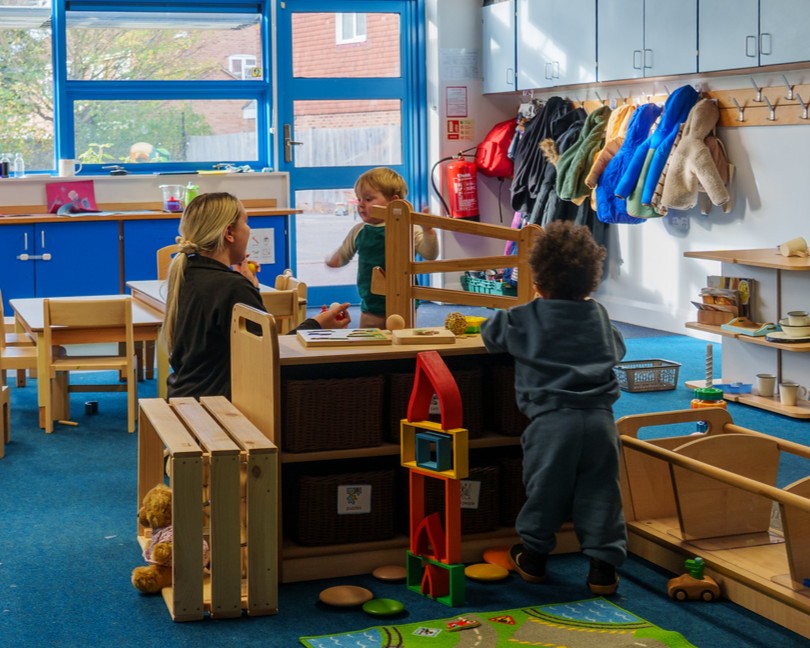
    Establishing an environment in which children feel welcomed, safe and like they belong is vital to creating provision which meets the needs of the many not just the few. We know that many strategies and adjustments we make for children with Special Educational Needs and Disabilities (SEND) can support all children and can enhance the learning of those with and without emerging or identified needs. Therefore, creating inclusive provision in the early years is key to providing opportunities for learning and development for all children.

    Why it matters

    For all children the environment they learn and grow in can shape their sense of belonging and their aspirations for the future. It’s not just about physical space—it’s about the attitudes, ethos, and values that surround them. When educators and peers embrace inclusion, it sends a powerful message: every child is valued, accepted, and celebrated for who they are.

    Supporting inclusion while meeting a child’s needs has a profound impact on their mental health and wellbeing. It shifts the focus from trying to help the child to fit the environment and instead adapting the environment to meet the child’s needs. This mindset opens up possibilities, helping children feel seen and supported rather than isolated or misunderstood.

    A whole setting approach

    Developing your inclusive provision is most impactful when the whole setting is working toward the same goal. Having the same expectations, attitudes and practice of inclusion will ensure that it becomes embedded every day in the setting. Ensuring all team understand the expectations for the environment and curriculum when in comes to inclusion will support you in working towards the same goals.

    1. Inclusive Ethos and Leadership
    • Leaders champion inclusion as a core value.
    • Inclusion is embedded in the setting’s vision, policies, and daily routines.
    • Staff are empowered to reflect on and improve inclusive practices.


    1. Staff Training and Development
    • Regular CPD on inclusive pedagogy, SEND, cultural competence, and trauma-informed care.
    • Staff are confident in identifying and supporting diverse needs, working together to share knowledge, strategies and ideas.
    • Peer support and reflective practice are encouraged, this may be through informal discussions or one-to-one conversations.


    1. Environment and Resources
    • Spaces are physically accessible and sensory-friendly.
    • Resources reflect diverse cultures, languages, and abilities.
    • Quiet areas and flexible spaces support emotional regulation and different play styles.


    1. Curriculum and Pedagogy
    • The EYFS framework is used flexibly to meet individual needs.
    • Activities and experiences are adapted so that all children have the opportunity to participate and engage.
    • Stories, songs, and play materials represent a wide range of identities and experiences.


    1. Family and Community Engagement
    • Families are welcomed as partners in learning.
    • Communication is inclusive (e.g., translated materials, visual aids).
    • Community links enrich the setting and promote belonging.


    A Framework for Change

    Reflecting on our practice is essential as it enables us to grow, adapt and create more inclusive and responsive environments for the children within our care. It can help us to identify what works well in our settings and can enhance learning for all children. Vitally, it can also highlight how some assumptions, biases or routines may unintentionally exclude children. By uncovering these blind spots we can make adjustments and adaptions to remove these barriers and give every child equal access to learning in a way which is right for them.

    Reflecting on your setting may happen in many different ways, you may focus on one question at a time or utilise one-to-one discussions with your team members to gain insight from people across the different roles of your organisation. Creating truly inclusive provision won’t happen overnight, or through asking one golden question of yourself or your team, but by regularly asking the right questions, you can keep inclusion at the forefront of everybody’s minds and make conscious choices to improve your practice.

    Asking one reflective question a day can be a powerful way of developing your knowledge and practice as an educator.

    *What challenging behaviour did I face today? How did my response support the child? Could I have responded differently?

    *How did I meet a child’s emotional and developmental needs today? How could I have approached it differently to achieve better outcomes

    *Was my language inclusive and affirming? What alternative language could I have used?

    These reflections allow us to notice patterns, behaviours and subtle cues that we may have missed in the moment.

    Consider your actions and those of the team around you and establish what you wish to reinforce or change about your practice tomorrow and in the days ahead.

    Using a framework of reflective questions regularly, will support you in developing a consistent whole setting approach to inclusion. Focusing you to cover all areas of inclusion and enabling all team members to understand where you are on your reflective journey to inclusion.

    Dingley’s Promise have developed a reflection framework to support whole setting inclusion, ensuring continual and honest reflection and adaptation towards inclusion and keeping inclusive practice, ethos and values at the heart of practice.

    The framework is designed to highlight key questions to support the embedding strong inclusive practice across your provision, including through your leadership, environments, educators and transition processes. Visit www.dingley.org.uk/reflectiveframework  to access our reflective framework and other Dingley’s Promise resources.

    Meggie Fisher, Head of Quality for Dingley’s Promise


  • Response to the new Child Poverty Strategy

    Response to the new Child Poverty Strategy

    Dingley’s Promise welcomes the new Child Poverty Strategy, which recognises the urgent need to address the growing numbers of children across the country living in poverty. Families of children with SEND are amongst those most impacted by the ‘double disadvantage’ of higher living and care costs as a result of their child’s needs, as highlighted in recent research from The Sutton Trust linking poverty and SEND.

    The strategy recognises that affordable childcare is critical for giving children the best start in life and reducing the impact of child poverty. However, the strategy does not address the fact that access for children with SEND to early years education is a key barrier to equal opportunity. The link between poverty and SEND is clear and therefore any policy aiming to reduce child poverty must also actively consider how to ensure children with SEND have full access to education, health and care services. Without addressing the needs of this group of children, closing the gap cannot become a reality and a large number of children will continue to be left behind.

    We welcome the scrapping of the “two-child limit” on benefits (Universal Credit/child elements), which will provide much needed financial support to more families.  The strategy also welcomes a number of areas for extended support such as breakfast clubs and holiday and wrap around care. We are however, very aware that unless correct measures of support are put into place to make these sessions fully inclusive, children with SEND often face limited access to these services due to an inability to meet needs effectively, leading to greater inequality.

    The Strategy refers to strengthening “local services,” such as health, social care, housing and other support services, which would make a significant difference to families of children with SEND, who regularly have to repeat information within different formats. However greater integration between anti-poverty measures and local SEND services is needed for this to be impactful.

    The document demonstrates the intention to remove ‘structural barriers to employment’, which may in some cases, where children are able to access entitlements, help families to work more. However, we know for many families the demands on family life, medical appointments and levels of care and support required in reality make working extremely difficult – something which is not fully recognise or addressed within the strategy.

    We stand with our partners in committing to contribute to the Government’s upcoming childcare review and the Schools White Paper, to strengthen the equity in the system, by directly tackling the crisis in access to early education for children with SEND. This will build on what has been outlined in the Poverty Strategy and is critical for ensuring that we do not continue to uphold an inequitable system, in which children with SEND are already more likely to be living in poverty, and have less chance of accessing life-changing early education.

    You can read the full Governement Strategy here.

  • Reflections on the last year

    Reflections on the last year

    Every year when I sit down to write my section of our Impact Report, I reflect on what an incredible year of growth and development we have had. As this annual report reflects, we have once again seen significant growth in all areas, taking the charity in new and exciting directions.

    This year, I celebrate a decade in my role as CEO of Dingley’s Promise, and I have reflected on the huge changes within the charity and its wider impact during this period. When I became CEO, we supported children through three specialist centres in Berkshire. Today, we have ten centres
    reaching over 500 children a year, over 28,000 learners on our early years SEND inclusion training, and contribute to policy development at the highest level, advising Government officials. We are now the largest provider of specialist early years centres in the UK and are widely recognised as the voice of children with SEND in the early years and their families.

    Throughout this growth, we have worked with incredible people who believe in the power of inclusion and support our aims and mission. The children and their families, who we are honoured to be able to support at such an important time in their lives. The strong team of committed and passionate professionals we have brought together in our organisation. The local authority teams, health professionals and education professionals we work alongside to give children the best start in life. Our amazing donors and supporters who contribute financially and in kind, to make sure we can
    give the children and families everything they need. Lastly, our organisational partners, who help us to facilitate change and impact at a national scale and the decision makers who work with us to ensure children with SEND in the early years are prioritised.

    Please join me in celebrating our progress this far and in looking forward to the future and continued growth and success of Dingley’s Promise. Over the next few years, I expect to see the number of services we offer in England through centres and our family support outreach programme to grow
    considerably. I am excited to see our training gain momentum across the early years workforce and our influence lead to more national policy change, which directly benefits children with SEND and their families.

    I am so proud of everyone who has made this possible, and we will continue to champion the voice of children with SEND and their families in everything that we do.

    Catherine Mole MBE – Dingley’s Promise CEO

    You can read the full Impact Report here.

  • Solving the SEND Crisis report – our response

    Solving the SEND Crisis report – our response

    We welcome the ‘House of Commons Education Committee Report’ and were grateful to have been asked to provide evidence for this process, which has clearly been acknowledged within the recommendations. The report recognises that ‘there needs to be that value and recognition of the early years’ and aligns closely with the recommendations Dingley’s Promise made when giving evidence to the Committee to improve funding, access and workforce capacity in the early years. We are pleased to see repeated emphasis on early identification, which is especially vital for the growing numbers of children with SEND.

    The report identifies the need to ‘undertake further work to understand where the balance of resource should sit between early years and reception’ and we would strongly recommend the focus on a needs led approach in the early years and increased resource and investment to enable effective and smooth transitions between the two stages of education.

    The report addresses the current ineffectiveness of the funding in early years and the ‘inconsistency in the delivery of early years provision and (SENIF)’, and encourages the Department for Education to ‘establish a ‘set of national inclusivity requirements for early years settings’. We welcome this in principle but are clear that funding must be directed to both children with ‘High Needs’ and those with ‘Low and Emerging’ needs. Funding must be sufficient and sustainable to enable educators to respond effectively to meet a range of needs regardless of whether there is an EHCP, diagnosis or specialist input. This requires the ringfencing of the High Needs Block to support children in the early years and for SENIF funding to be available and sufficient for those with low and emerging needs. We also support the recommendation to delink Disability Living Allowance (DLA) and Disability Access Funding (DAF).

    We are pleased to see the report acknowledge the role of Best Start Family Hubs in ‘presenting a valuable opportunity to engage with families earlier and identify SEND needs at the earliest possible stage’. The need for greater integration of specialist services, early years teams and early years settings to provide holistic early support to families is unquestionable. To be effective, family hubs should support early identification of need and leadership of local support services for families of children with SEND. All staff need to have inclusion training, and the SEND staff should be skilled and experienced in supporting families of children with SEND.

    Upskilling the workforce to support inclusive practice is key to the success of any funding measures and we are pleased to see the report acknowledge the opportunity through the Best Start in Life strategy to ‘ensure that there is a ‘strong and consistent framework for building SEND capacity and good practice in early years settings’. It is vital that a whole setting approach to inclusion is taken in every setting, underpinned by high quality inclusive practice, accessible environments and inclusive curriculum. Without mandatory SEND Inclusion training across the sector for new and existing educators, we can not hope to achieve inclusion and give every child an equitable early years education, which improves children’s longer term outcomes and supports the government’s aims to improve child development levels.

    We encourage the government to factor in these clear recommendations to the forthcoming White Paper reforms and are keen to work with them to support reforms that ensure necessary system change in the early years and greater opportunity, access, support and funding for children with SEND and their families.

    Read the full report here Solving the SEND Crisis

  • Dingley’s Promise welcomes interim Chair of Board Sarah Clarke

    Dingley’s Promise welcomes interim Chair of Board Sarah Clarke

    Sarah became a Trustee of Dingley’s Promise in 2023 and is proud to contribute to their mission of ensuring every child has the best start in life, while championing inclusion and supporting families to thrive.

    Sarah is a dedicated parent carer of two neurodivergent teenagers, each with very different needs and diagnoses. Her personal family journey, alongside the experiences of other families she has met along the way, has been the driving force behind her commitment to improving outcomes for children, young people, and their families.

    She first became involved with her local Parent Carer Forum in 2015, quickly stepping into the role of Chair, and later becoming Joint CEO when the forum transitioned into a charity. Sarah’s leadership has always been solution-focused, building constructive partnerships with stakeholders to drive positive change.

    In 2020, Sarah joined the National Network of Parent Carer Forums (NNPCF) as the South East Regional Director, supporting 19 Parent Carer Forums across the region. In this role, she worked regionally and nationally with key partners, including the Department for Education, health bodies, and local authorities. In Spring 2023, she was appointed Co-Chair of the NNPCF, further strengthening her influence in shaping national policy and practice.

    Her lived experience, combined with her leadership skills and commitment to collaboration, continues to guide her work in championing the voices of families and ensuring meaningful change. We are delighted that Sarah has agreed to lead our Board of Trustees as an interim chair and are excited about the vision and direction she will bring.

  • Housebuilder David Wilson Homes raises over £40,000 for Dingley’s Promise as their Charity of the Year

    Housebuilder David Wilson Homes raises over £40,000 for Dingley’s Promise as their Charity of the Year

    Staff at Hungerford-based housebuilder David Wilson Homes Southern have completed a full year of fundraising for Dingley’s Promise as their charity of the year, raising an incredible £41,900.

    Over a 12-month period ending in July 2025, employees from across the business came together to take part in a wide range of fun and charitable activities to support the Berkshire-based charity, which delivers nursery education to children under five with Special Educational Needs and Disabilities (SEND) and provides vital support and advice to their families.

    The total raised by staff has been matched by the housebuilder’s parent company, Barratt Redrow, further boosting the support for Dingley’s Promise and its services across the region.

    Catherine McLeod, CEO at Dingley’s Promise, said: “We are delighted to receive such a generous donation, thanks to the fundraising efforts of the team at David Wilson Homes. Raising such an incredible amount of money will allow us to provide even more opportunities to children with Special Educational Needs and Disabilities (SEND) in the early years across Berkshire. Our early support gives children the best start in life and gives families direction and strategies needed to fully support their child’s educational journey. A huge thank you to everyone involved.”

    Among the key fundraising highlights was a charity football tournament held at Reading Goals Sports Complex, which saw 16 teams – including many David Wilson Homes employees and sub-contractors – go head-to-head in a lively and well-attended competition.

    Another popular event was a furniture sale at the housebuilder’s Abbey Fields development in Abingdon, where employees were invited to browse and purchase stylish pieces from the four bedroom Holden show home, all hand-picked by professional interior designers.

    In the run-up to Christmas, the team took part in a Christmas Jumper Day, donning their festive woollies in support of the charity

    The housebuilder also made a number of thoughtful donations during the year, including 40 Easter eggs gifted to Dingley’s Promise’s West Berkshire centre in Newbury to help bring a touch of seasonal cheer to children using the service. A diverse selection of interactive books was also donated to the centre to help expand its library and provide engaging resources for children with SEND. A team from David Wilson Homes’ Commercial department also rolled up their sleeves for a charity car wash, showing plenty of spirit as they grabbed sponges and buckets to clean vehicles and raise more money for the cause.

    Campbell Gregg, Managing Director at David Wilson Homes Southern, said:

    “It’s been an absolute pleasure for us to partner with Dingley’s Promise over the past year. From football matches and furniture sales to car washes and even getting ‘gunged’ – the team has thrown themselves into every activity with real enthusiasm. Dingley’s Promise provides an essential service to families across Berkshire, and we’re proud to support its work and help raise awareness of the importance of early SEND support. We hope the funds raised will make a real difference to the children and families the charity helps every day.”

    Dingley’s Promise runs specialist centres across the South of England which focus on developing personalised strategies to support the learning and development of children with SEND. By offering early intervention and inclusive education, the charity ensures every child receives the best possible start in life. Local fundraising and partnerships with local businesses are vital to ensure that the charity can continue to transform young lives. If you’d like to discuss a charity partnership of the year or other fundraising opportunities please contact our Head of Fundraising Kate [email protected]

  • Government ‘Best Start in Life’ Strategy – Our Response

    Government ‘Best Start in Life’ Strategy – Our Response

    Dingley’s Promise welcomes the Government’s ‘Best Start in Life’ Strategy and its vital focus on valuing and investing in early childhood. For too long, children with SEND have not been able to access their early years entitlements in the same way as other children, leaving them further behind their peers, and their families feeling isolated and frustrated.  

    The Government states that it will “increase access for children with SEND, by investing in the help available to them to support inclusion, and early intervention to prevent the escalation of needs.”We have actively called for changes to the system to improve access and life outcomes for children with SEND, and for a system which puts children and families at the centre and ensures collaboration for the best outcomes of each individual child. We are delighted that the Strategy aligns with many of our recommendations for early years SEND Inclusion.  

    There was recognition that ‘the early years funding system creates a barrier to delivering provision for children with SEND.’ We are pleased to see increased investment in early years SEND, through a new, easy to access funding stream in early years settings. This is intended to ‘help fund extra resources for providers to invest in inclusion and early intervention and prevent the escalation of needs at a time when additional support can have the biggest impact in a child’s development.’  

    In addition, we welcome the proposed funded partnership working between early years settings and schools, to allow for smoother transitions for children, seeing first-hand the impact of effective and ineffective transitions on long term educational outcomes for children. 

    Having developed an outreach service in each of our communities as well as online information sessions and digital resources, we are happy to see the expansion of Family Hubs. Having a dedicated professional in each hub who is trained to support families of children with SEND is absolutely critical. We welcome the drive towards ‘helping to identify children with SEND who may need extra help early on’ as well as building links with early years settings and health services and assisting parents at this early stage. We believe this approach will have significant impacts on families, many of whom have expressed the importance of feeling included and supported at what can be a confusing and isolating time. 

    The issues raised by families in our recent parent roundtable held in Westminster highlighted the complexity and ineffectiveness of current family support systems and just how critical it is for families to have this kind of support, information and signposting in the early years.  

    Dingley’s Promise has long called for an inclusive approach to early years education. We were encouraged to see a recognition of the importance of ‘strong inclusive practice’ for all children. The Government has demonstrated their intention to ‘make inclusive practice standard practice in the early years by embedding an inclusive approach in our workforce education, training and leadership opportunities.’ Our own research with providers reflected that 77% believe that inclusion training is a priority for their teams, and when considering inclusion as a whole, 63% of settings felt the best way to improve their support to children is through staff training. We have seen first-hand the impacts on individuals and settings who undertake high quality inclusive practice training, increasing confidence and knowledge to support a broad range of needs and welcome more children into their settings. 

    Chief Executive Catherine Mole MBE welcomes the proposed Best Start Strategy: “This strategy reflects the Government’s commitment to prioritising early years and children with SEND, and we are delighted that it addresses many of the barriers we have highlighted in recent months. Dingley’s Promise believes that these initiatives will make a significant difference to children with SEND and their families in the early years, opening up more places in early years settings, and driving strong inclusive practice within a skilled and valued workforce, from which all children will benefit. We are committed to working with the Government to bring this strategy to life and recognise that this is the first step in a longer process that we hope will enable every child to thrive in the early years.” 

    We look forward to hearing more about the direction of the strategy and the specific SEND reforms which will be outlined in the Schools White Paper in the autumn.  

  • “Heads forced to ‘lobby’ for specialist provision in early years” – TES Magazine

    “Heads forced to ‘lobby’ for specialist provision in early years” – TES Magazine

    In an article for TES Magazine, Dingley’s Promise CEO Catherine McLeod highlights the importance of early years SEND provision amidst the concerns of many in the sector that not enough is being done to support children with complex needs in this crucial stage of development.


    Catherine McLeod, CEO of Dingley’s Promise, warned that creating specialist provision in early years has been an overlooked policy area until now.

    She leads the largest specialist provider of nursery education to children under five with SEND in England, running nine centres.

    “When it comes to creating units, specialist provision has never been properly considered in the early years,” she told Tes.

    Ms McLeod said this was strange given the prominence of such provision in schools, and suggested that in the past, there have been concerns that specialist provision in early years works against ensuring inclusion in mainstream.

    But she added: “I think people have to get their head around the idea that actually, if you get in early, you give the right intervention, you can actively move that child into the mainstream.”


    Read the full piece here.

  • How to adapt and maintain a high-quality curriculum

    How to adapt and maintain a high-quality curriculum

    At Dingley’s Promise we have been developing an inclusive curriculum which is flexible and adaptable to meet the needs of all children. Here are some recommendations on how to adapt and maintain a high-quality curriculum to meet the changing needs of children:


    • Managers and the team should actively participate in experiences so that they can see them from the child’s point of view and adapt as needed.

    Actively participating in experiences that you offer will enable you to see them from the child’s point of view. It is important to do this both with the children, relaxing into the play and enjoying the experience for what it offers as well as taking some time as a team to play and discuss the learning opportunities you find with your experiences. recognising the child’s point of view will support you in ensuring the right resources are present and available and knowing different ways you can adapt in the moment to promote learning for a range of children and their individual learning styles.


    • Regular observation in practice to review the curriculum and its impact as a team, making adaptations as needed.

    It is also important to take the time to observe the curriculum in practice as you will notice different things from this perspective. Discussing these observations as a team will enable you to build a rounded picture of the impact your curriculum is having on the children and teaching techniques of the team.


    • Take the time to reflect on the impact the curriculum is having on the cohort of children.

    It is likely you will notice differences between cohorts of children as no one child is the same and the ways they engage with educators, the environment and each other will vary with the different relationships forming. Reflecting on the impact of the curriculum with your current cohort will signpost you to any changes or adaptions that would be beneficial to meet the needs of the children you are currently supporting. The following questions could be a useful springboard when reflecting on your curriculum.


    You also need to regularly ask the following questions to ensure that your curriculum is impactful, making adaptations based on your reflections.


    • Have children made expected or significant progress in their learning?
    • Have children been engaged and motivated by the experiences on offer?
    • Did children find new passions and interests?
    • Did the curriculum activities stretch the children’s thinking?
    • Do educators feel confident applying the curriculum to meet a variety of children’s needs?


    We must aspire to create ambitious inclusive curriculums which challenge our children’s thinking and offer broad opportunities to build on learning in a child-centered way.  The children in our centres are thriving as a result of the broader curriculum opportunities we are providing. It is a constant process of reflection and adaptation for the cohort of children to ensure full accessibility and developmental progress.


    Visit our Inclusive Curriculum page for more details on how to build an inclusive curriculum.


    By Meggie Fisher – Head of Quality, Dingley’s Promise