Category: DP News

  • Black History Month 2024

    Celebrating the diverse nature of our world is important every day. At Dingley’s Promise it is important to us that all children are represented and are able to see themselves and others in a positive light. Whilst Black history did not all occur within a month, Black History month is a great springboard to recognising and engaging with some key figures and events from the past.

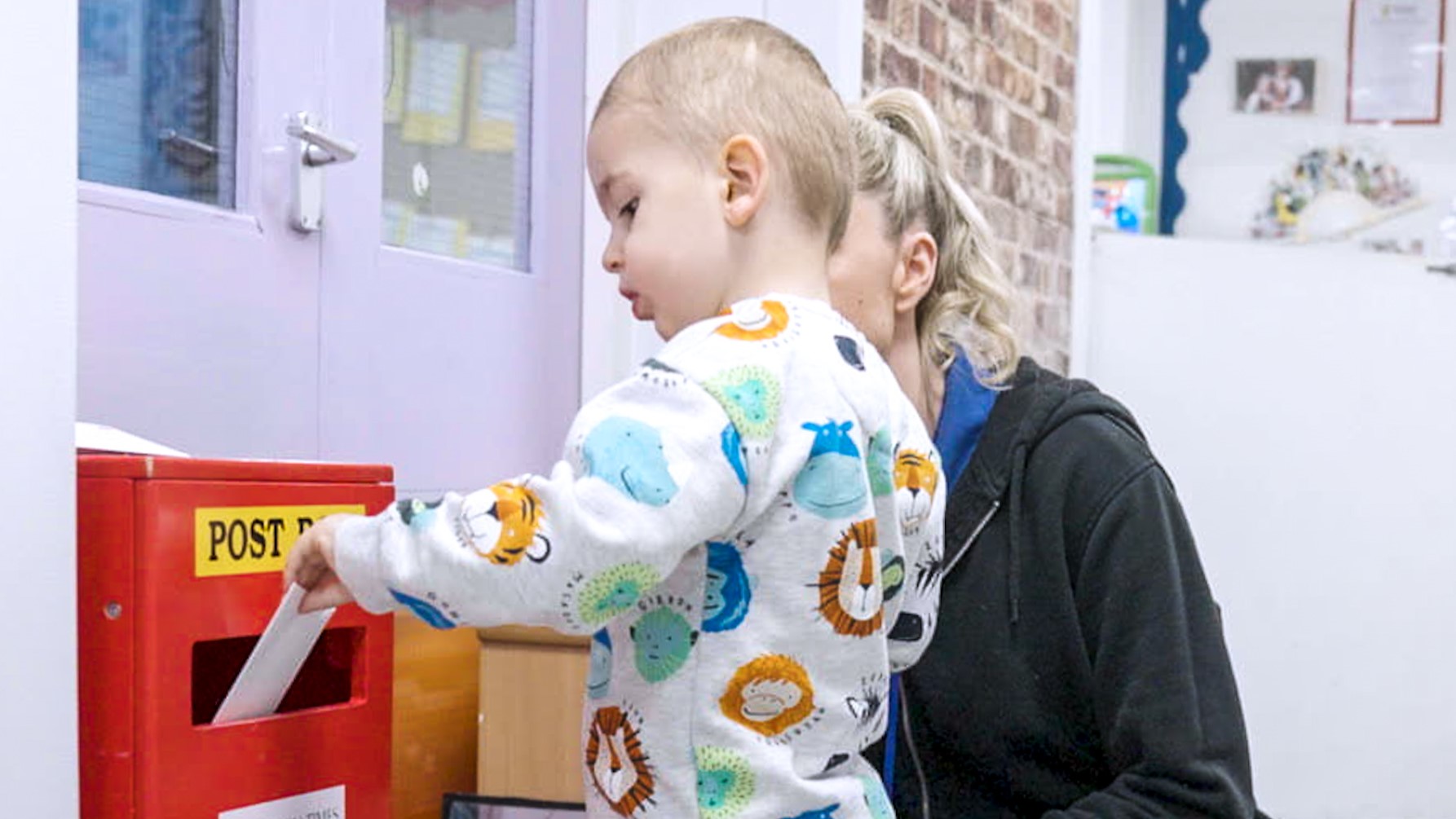
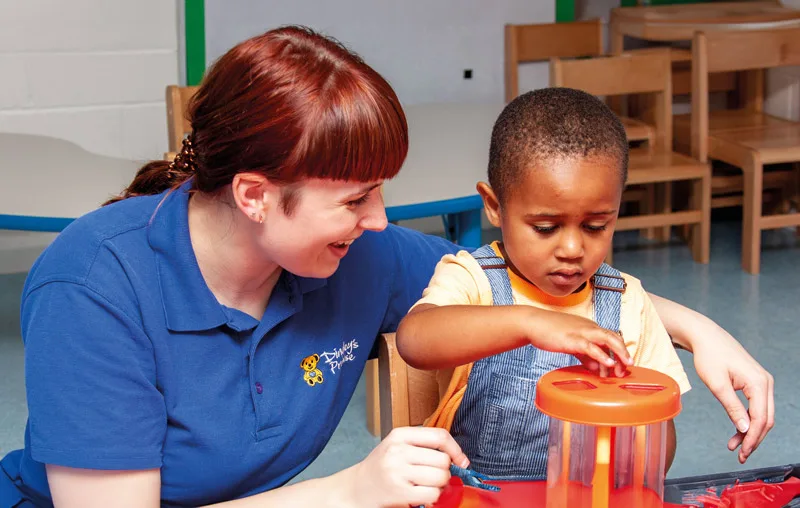
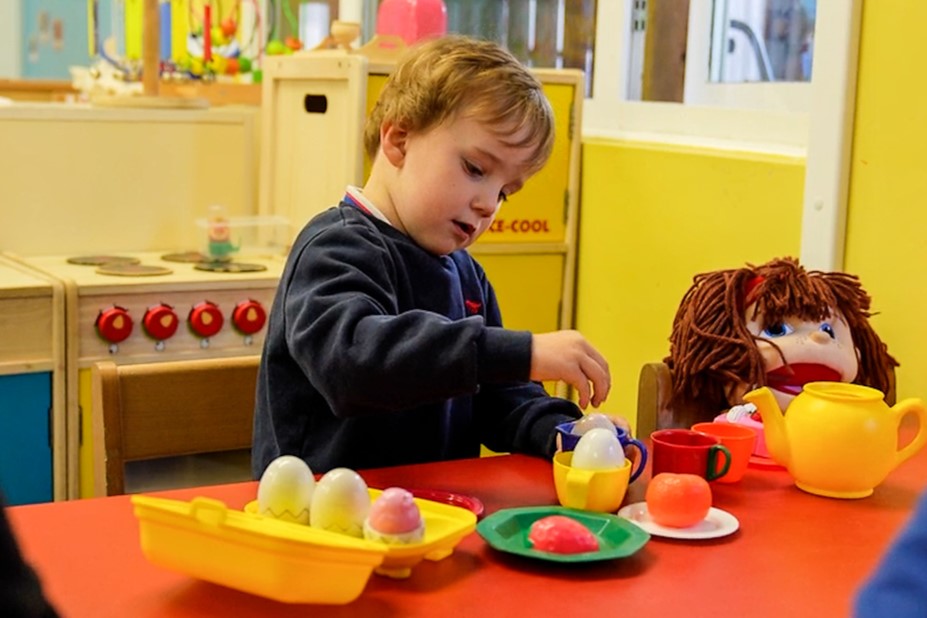
    Children at our centres have been celebrating Black History Month with a range of activities, stories and resources. Take a look at what we’ve been up to and learn more about elements that you can bring to your practice this month!

    In our centres children have been:

    • Role playing astronauts with a box rocket and building Duplo rockets to celebrate Mae Jemison.

    • Exploring music and dance from countries around the world including Kenya and Jamaica.
    • Crafting traffic lights, playing stop/go games outside using the colours of traffic lights.

    • Creating hand prints and faces using a variety of different skin tone colour playdoh.
    • Listening to sensory stories based on books with a diverse range of main characters, including Handa’s Surprise and Coming to England.
    • Exploring the story of Rosa Parks through sensory stories and play.


    Helpful resources for celebrating Black History Month in the early years:


    Books We Love:

    • My Skin, Your Skin by Laura Henry-Allian, illustrated by Onyinye Iwu – Free resources (although devised for key stage 1, also suitable for early years.)
    • So much! By Trish Cooke and illustrated by Helen Oxenbury
    • Look up! By Nathan Bryon and illustrated by Dapo Adeo
    • Coming to England by Baroness Floella Benjamin, illustrated by Diane Ewe
    • Handa’s Surprise by Eileen Browne
    • A Day With No Words by Tiffany Hammond, illustrated by Kate Cosgrove


    Remember it is important for your children and families to see themselves represented within your environment all year round, you don’t need to put these resources away because Black History month has finished!

    If you’re interested in learning more about the intersections of different identities with SEND in the early years, our new training course can support you to reflect on your practice and introduces new resources and strategies for ensuring inclusion is at the heart of your setting. Find out if you’re eligible for funded courses in your area with our training finder.

  • Post Election Statement

    Post Election Statement

    Securing inclusion for children with SEND in the early years is our main priority and we are excited to work with the new government to make vital changes over the coming months to give more children with SEND access to early years education.

    In conversations with us, the Labour party have shown their understanding of the need to ensure that every child can access their early years entitlements, and Bridget Phillipson has emphasised how important the Bell Review will be in outlining the steps the new government will be taking around early years SEND. We are keen to see the party action the crucial de-linking of Disability Access Funding from Disability Living Allowance to take pressure off families and release funding quickly so that settings can welcome children with SEND. We also hope to see mandatory inclusion training for all early years professionals. It is also vital for the high needs block to be ringfenced to support children with high needs in the early years.

    We must focus on early intervention as this will give our children the foundations for a bright future in which they can achieve their full potential.

    Our young children with SEND need the fairer education system the government is proposing, and Dingley’s Promise are committing to helping them to achieve it.

  • Meet the Team: Q&A with Meggie Fisher, Quality Lead

    Meet the Team: Q&A with Meggie Fisher, Quality Lead

    How are you enjoying your role as Quality Lead with Dingley’s Promise?
    I love it! It’s amazing to be part of a team which is so dedicated to children with SEND and their families. I am lucky to be able to see the impact we have on a daily basis and the transformation we can have in improving lives and outcomes for children.

    What do you enjoy most about your job?
    Being around the teams and children daily and seeing the children flourish as a result of the support we give. I love seeing how everything we work on behind the scenes (such as policy, procedures and curriculum input) comes into practice to support the children. I am proud daily of the extra mile the teams go to in ensuring that families feel heard and valued.

    What are the challenges our early years teams face in delivering excellence?
    It can be difficult to recruit specialist staff to support children with complex SEND needs because it takes a certain type of attitude and approach to working. The staff we recruit are very unique and able to see the potential in every child and are committed to helping them achieve it. Our work can be emotionally challenging for us and our staff. We ensure that we focus on wellbeing and celebrating progress of both children and staff in our settings at every opportunity.

    What are the main priorities for our operational team moving forward?
    We are committed to working more collaboratively with local authorities who have a shared passion for responding to the needs of  children with SEND in the earliest years, and helping them to recognise and assess need and sufficiency levels in their local areas. We are working to embed the Dingley’s Promise Curriculum across our centres, ensuring that it is accessible and meets the needs of all individual children. We are also preparing for expansion by streamlining our systems and processes whilst giving each of our centres the flexibility to respond to the needs of their community of families and children.

  • Dingley’s Promise statement on changes to the EYFS

    Dingley’s Promise statement on changes to the EYFS

    On October 27th 2023, the Government announced regulatory changes to the Early Years Foundation Stage (EYFS) after a national consultation. Dingley’s Promise were involved in the consultation, highlighting the need to consider the impact of proposed changes on children with SEND in the early years, both individually and as a member of groups such as the Special Education Consortium.

    The wide-ranging consultation included two proposals that concerned us greatly – the reductions to the number of Level 2 qualified practitioners, and the removal of qualification requirements outside of peak times. Research shows that the quality of provision – not the hours in a setting – is what gives children the best start, and for children with SEND this is especially important. With settings reporting they are already struggling to cope with the rising numbers of children with SEND, these proposals would have likely seen a further increase in exclusions, and so we welcome this news and recognise that the Government are listening to and acting on these important concerns.

    On the same day, the Government has also released its report on the impact of the 2021 changes to the EYFS, which recognises that while the changes have led to improvements in the quality of early years provision, there are real concerns about the unintended impact this has had on provision for children with SEND. We are working with the Department for Education on new guidance for settings and local authorities around assessment of children with SEND. Since the changes and the focus on reducing tracking of child development, the gap between the amount of paper work for children with SEND and their peers has grown significantly. As the early years sector struggles with a recruitment and retention crisis, this can lead to children with SEND being turned away from settings because of a lack of staff to fill in time consuming paperwork. We now need to establish guidance on understanding and supporting the needs of children with SEND using formats that are used by settings and accepted by local authorities who make decisions on providing funding for those children. This should not take away from the EYFS 2021 focus on spending time to really understand the child rather than filling in paperwork, but must enable high quality early intervention.

    In light of the progress on these important issues and the willingness of the Government to engage with the sector, we are hopeful that there will be significant improvements to early years inclusion for children with SEND in the coming months.

    Links:

    https://www.gov.uk/government/consultations/early-years-foundation-stage-eyfs-regulatory-changes

    https://assets.publishing.service.gov.uk/media/6537e5503099f900117f308f/EYFS_2021_Reforms_Evaluation_Report.pdf

  • Reflections on Coram’s Childcare Survey 2023

    Reflections on Coram’s Childcare Survey 2023

    With the release of Coram’s Childcare Survey for 2023, we are reflecting on the current situation in the early education and childcare sector for children with SEND. Coram’s research shows that in England, just 18% of local authorities say they have sufficient places for disabled children; less than 1 in 5. Urgent change is required to ensure that children with SEND are able to reach their full potential in the early years, providing them with the foundation to thrive as they grow up.

    Families of disabled children have already been hit hard by the pandemic and current cost of living crisis. The lack of early years provision for their children only exacerbates the inequalities they face. In a recent report from the Disabled Children’s Partnership (Failed and Forgotten, March 2023), 3 in 4 parent carers said they have had to give up employment (or their whole career) due to the lack of support available for their disabled child. Almost half answered that they are unable to work and are experiencing poverty. The cost of living crisis is having a huge impact on families, and the rising costs of childcare are yet another barrier faced by disabled children.

    Educational outcomes for children with SEND have been low in the early years for a while; in 2018/19, 76% of children with SEND did not achieve at least the expected level across all learning goals (compared to 24% for those children with no identified needs). The vast inequalities faced by disabled children are having a detrimental effect on their future, with only 1 in 5 families feeling that they receive the support needed for their child to fulfil their potential. The decrease in available childcare places will only widen the gaps between children with SEND and their peers.

    It does not come as a surprise that local authorities across the country are unable to provide suitable places for disabled children; in March 2022 the Early Years Alliance highlighted that many settings were struggling financially in regards to providing support for children with SEND. At that time 14% of early years provisions said that they expected places to be reduced going forward due to costs. The funding that many were receiving wasn’t adequate to provide the quality of care for children with SEND that they wished (87%), and 40% didn’t receive any specific funding towards SEND provision.

    Urgent reform needs to happen within the childcare sector; the rising costs of childcare demonstrated in Coram’s survey are disproportionately affecting children with disabilities both through the lack of places offered, and the impact that the cost will have on many of the families’ already bleak financial situation.

    Dingley’s Promise is committed to improving the future for children with SEND in the early years; with our specialist centres opening this year in new locations and our inclusion training programme ever expanding, we are working hard to build a more inclusive early education landscape that cultivates the development and potential of all children.


    Childcare Survey 2023 (Coram Family and Childcare, March 2023)

    Failed and Forgotten (Disabled Children’s Partnership, March 2023)

    Right Support, Right Place, Right Time – Government Consultation on the SEND and Alternative Provision System in England (March 2022)

    Too Little, Too Late – SEND Funding and the Early Years Sector (Early Years Alliance, March 2022)

  • Statement on Government’s SEND and alternative provision improvement plan

    Statement on Government’s SEND and alternative provision improvement plan


    2nd March 2023

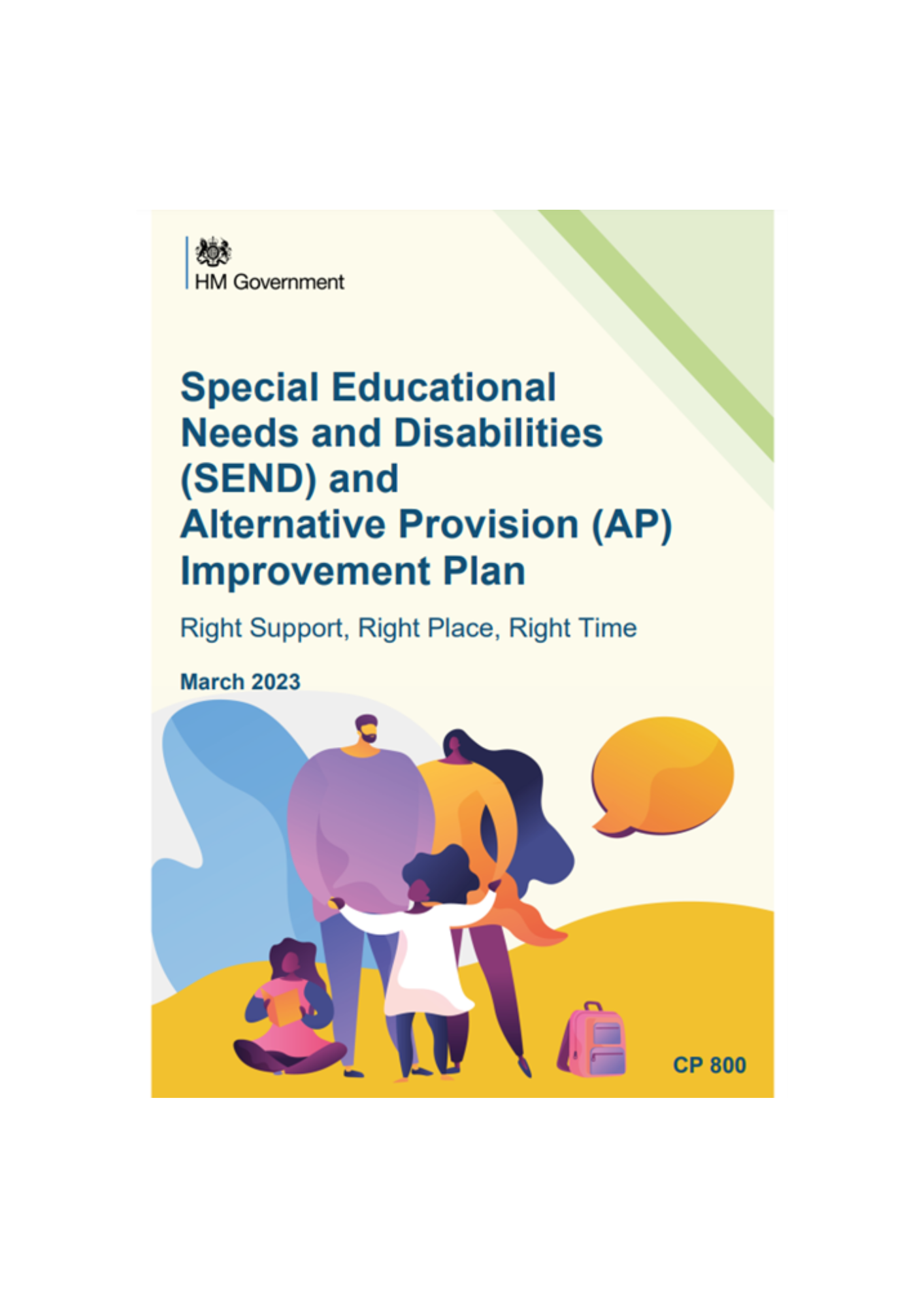
    We welcome the release of the Government’s SEND and AP Plan, and are particularly happy that within this plan, early education is repeatedly acknowledged to be a key stage in the wider educational journey of every child.

    The Plan recognises ‘the important role of the early years sector in the early identification of needs and in building up effective working relationships with parents about their child’s needs’. Reflecting on the consultation process, the Government notes that ‘respondents highlighted the crucial role of high-quality early years support in preventing unnecessary escalation of need and providing children with a strong foundation for their future educational journey.’

    For the early years sector, this formal recognition of the vital role we play in providing the best start for children with SEND is crucial and we appreciate the actions taken by the government in response to requests for more details on the early years in the plan. We also welcome the news that the review of the Level 3 early years educator qualification is likely to see the addition of a section on SEND  which will  increase knowledge, understanding and confidence of all newly qualified early years practitioners to work inclusively.

    The key action linked to the early years is the commitment to provide more Level 3 Early Years SENCO training. While this is important, we agree with the view also expressed in the plan that ‘a whole-setting inclusive ethos improves the sense of belonging for those with SEND’. We would therefore encourage development of the  plan to incorporate inclusion training for ALL early years practitioners rather than focusing only on the SENCO.

    We welcome the inclusion of early years in other areas of the plan including; the focus on high quality early intervention, the creation of practice guidance, national standards, early years sufficiency data, transitions to school, Ofsted area inspections and funding.

    As a charity running early years specialist Centres across the country and delivering a vital service, we are concerned that early years is not mentioned in conjunction with strengthening AP provision. We would encourage the analysis of the use of independent specialist AP in the early years to understand whether this has similar benefits for children and families as it does later in the education system. If similar benefits are found, then there should also be a focus on supporting the development of more of this kind of provision in the early years.

    We are committed to supporting the development of the SEND and AP system as described in the plan, with a focus on ensuring that where the plan makes clear recommendations in relation to early years, these result in clear actions.

    This is an encouraging starting point for an improved SEND system that acknowledges the early years as a vital stage in all children’s development and recognises that early intervention is critical both for both children and families.

    Catherine McLeod – CEO Dingley’s Promise

    Read the Government plan in full here https://www.gov.uk/government/publications/send-and-alternative-provision-improvement-plan
  • Remembering Chris Khoo

    Remembering Chris Khoo

    In November last year we lost a much-loved patron and dedicated supporter of Dingley’s Promise.

    Christopher Khoo DL had been a patron of Dingley’s Promise for 6 years and the generosity of his time and unfailing support has been vital to the success of Dingley’s Promise over the last few years.

    Chris approached everything with positivity and along with his wife of 50 years Naomi, attended a great many events in support of the charity, continually raising awareness and even hosting fundraising events at their beautiful home.

    We are extremely grateful for all that Chris contributed to the charity and many staff, children, families and supporters who met him, will treasure fond memories of his kindness and beaming smile.  The Dingley’s Promise team will certainly have him at the forefront of our minds as we endeavour to grow our charity to deliver on Chris’ belief that every child with Special Educational Needs and Disabilities deserves the best start in life.

    We are grateful to for the continued support of Naomi, who remains passionate about the education of our youngest children, and the thoughts of the Dingley Family are with her and her family during this difficult time.

    In loving memory

  • CEO Catherine McLeod on Recruitment in the Early Years

    CEO Catherine McLeod on Recruitment in the Early Years

    Last night our CEO Catherine McLeod spoke to BBC News on behalf of Dingley’s Promise about staffing and recruitment in the early years. As a sector, recruitment and retainment is a huge issue, and the struggle to find and keep good staff is having a direct impact on children with special educational needs and disabilities (SEND). Families are being turned away from settings as they don’t have the staff to meet the child’s needs, contributing to the exclusion of children with disabilities and creating stress and anxiety for families with no support.


    “Early intervention is absolutely vital; the earlier we can understand their needs and how we can support them, the better life outcomes they will have”


    At Dingley’s Promise we recognise and appreciate the highly skilled nature of the early years workforce, however in the current climate there is a lack of funding for staff and the cost of early years settings across the country. The importance of early intervention needs to be recognised for the huge impact it can have for children with SEND; investment in the early years is life changing for children and their families. As part of the All Party Parliamentary Group, we are committed to speaking out on the challenges faced by children with special educational needs and disabilities, and will continue to push for positive change in the early years.

  • Dingley’s Promise Team Day 2022

    Dingley’s Promise Team Day 2022

    Dingley’s Promise Team Day 2022

    At the beginning of September early years practitioners, management, central and leadership staff and volunteers from across Dingley’s Promise came together for our annual Team Day! Kindly hosted by the Hilton Hotel in Reading, our wonderful team were treated throughout the day to wine and cheese tasting, personalised goodie bags, while Anne-Marie from Unlock Your Wellbeing presented an informative session on caring for yourself and improving your mindset.

    Working together to support children with SEND

    CEO Catherine McLeod shared updates about the organisation and how Dingley’s Promise is working towards expanding its Early Years specialist centres and family support offer. She also detailed the responses being made to staff feedback, ensuring that the voices of our skilled early years educators are heard and valued. Operations Manager Karen Vockins gave a refresher presentation with a focus on safeguarding children with SEND and their families, demonstrating the importance of communication and trust within our teams. Updates on our reach and plans for the range of training courses offered by Dingley’s Promise were provided by Training Programme Manager Amanda Brown. Our early years inclusive practice training aims to provide early years staff across the country with the skills to support children with SEND in mainstream settings, improving outcomes and building confidence in practitioners working with disabled children. As an organisation working towards the best start for every child with SEND, we’re excited to offer more local authorities and early years staff the opportunity to support inclusion in all settings. In the afternoon, Fundraising Manager Jo Evans hosted a 40th Anniversary planning session, with the centre teams working together to develop fundraising events for the charity’s birthday next year. Having to raise over £500,000 every year to sustain our work can be daunting, so it was wonderful to see the enthusiasm from our staff during the session. Keep your eyes peeled for our birthday fundraising events throughout 2023!

    Celebrating excellence in early years SEND provision

    Finally, our team awards recognized the hard work and long service of individuals within the charity.
    Award for Excellence – Shakila
    Award for Care – Zoe
    Award for Development – Louise
    Award for Integrity – Tanya
    Award for Empowerment – Sam
    Award for Volunteering – Ruth
    Parent Choice Awards – Jess, Sarah, Carly
    25 Years Long Service Award – Pauline
    5 Years Long Service Award – Tanya, April, Sarah
    2 Years Long Service Award – Deborah, Nicola, Emma, Georgia

    Our annual Team Days are a fantastic opportunity for our staff to meet, share triumphs, challenges and ideas, and build relationships. We are lucky to have so many dedicated, skilled individuals working hard towards creating a bright future for children with SEND!

  • Dingley’s Promise SEND Review Response

    Dingley’s Promise SEND Review Response

    Dingley’s Promise Response to the SEND Review –  

    Government consultation on the SEND and alternative provision system in England, March 2022

    Dingley’s Promise welcomes the much-anticipated SEND (Special Educational Needs and Disabilities) Review Green Paper and its commitment to bringing about major change in the current SEND system – a system that as the paper states, is currently failing to deliver improved outcomes for children and young people, is seeing the decline of both parental and provider confidence and is financially unsustainable.  

    Overall, there is an encouraging amount of focus on the early years, both in this paper and also in the Schools White Paper. Research from this paper shows that ‘high-quality early years provision for children significantly decreased the likelihood of a child being identified with SEN (Special Educational Needs) in later years.’ Stressing the important of early interventions to ensure the best long-term outcomes for children – and yet the early years remains hugely underfunded in comparison to the rest of the education system. MP Steve Brine called for early years professionals’ pay to match reception teachers’ pay in a recent debate in parliament. We would like to see more discussion around committing greater resources to the early years as much of the core investment described in the paper starts from the primary stage, with the exception of investment in training and CPD. 

    The paper recognises that the process is currently adversarial and parents fear being blamed for the needs their children have. Certainly, at Dingley’s Promise we have experienced parents being initially advised that they need parenting courses, rather than being listened to and trusted to know their children. This immediately tests the relationship between parents and professionals when they feel their voices are not being heard and their parenting skills are being challenged. The focus on the new plan on family hubs is therefore a positive one, which will hopefully establish a system of information and support around families. However, care must be taken to engage and really listen to family’s needs in this environment rather than purely imparting training. The commitment to having parents on local multi agency panels is welcomed, as in some areas this is still not commonplace, but to be effective this must include a diverse range of families and that their inputs being valued and acted upon.  

    The key area of concern remains around funding of the SEND system, new research released by the Early Years Alliance that showed 92% of early years settings have had to fund the cost of supporting children with SEND themselves – with 53% doing that on a regular basis. 28% of settings have declined a place for a child with SEND, and 14% expect the number of places for children with SEND to fall because they lack the funding to provide the right support. Dingley’s Promise have raised the issue of funding for early years send at the All Party Parliamentary Group for Childcare and Early Education, and we hope that the plans to simplify the SEND system and access to funding across the country will go some way to addressing this issue. The green paper states that there is recognition that early years’ settings are heavily impacted by local funding decisions, which they often feel they have minimal influence over.

    There will also be analysis of the use of inclusion funding in the early years addressing its ability to enable settings to provide the right support. The statistics above would certainly suggest that this in not working. Settings report specific difficulties where children are too young to access funding or are only able to access 15 hours of support when their entitlement is for 30 hours. If we do not resolve the funding issues for children with SEND in the early years, it will continue to drain the early years sector of funds at a time when it is already struggling. 

    We welcome the green paper’s plan for a simplified, standardised EHCP process that is digital and can travel across local authority boundaries. While only a small number of the total EHCPs in the country are in the early years, this will simplify the process for settings who often struggle with the administrative demands on this process. In turn, this will hopefully lead to more capacity in those settings to accept children with SEND who want to attend. It will also greatly help families who are either living on a border, or who need to move local authority area during the early years or at transition time. 

    The focus on increasing training in the early years for working effectively with children with SEND is much needed, but it should consider ensuring that every practitioner has an understanding of working inclusively with children with SEND, not purely focusing on a Level 3 qualified SENCO. Parents have expressed concerns about the impacts of only one person in a setting holding all the SEND expertise. For system-wide change, we recommend an approach that looks at raising the base knowledge levels of all practitioners around SEND, and ultimately this means that the standard Level 3 qualification should have a greater focus on this type of content. 

    Inclusion dashboards and local inclusion plans are in line with all the work we have done through the Early Years SEND Partnership, which suggests that to give children in the early years the best start and the best transitions to primary school, we must track key local data and really understand how inclusive we are. We look forward to sharing our learning on this through the consultation, and helping to shape what these dashboards look like, so that parents and professionals alike have a clear picture of what is working and what is not locally. We are committed to ensuring that every child who would benefit from accessing the mainstream in the early years has the opportunity to do so with the right support, however we must ensure that the mainstream is effectively trained, funded, and guided to support them effectively. Only once this investment is made will parents consider that mainstream education is a viable route for their child. 

    Taking into consideration the suggestions for changes to the current system, a few areas stand out across the age groups as needing more detail and consultation: 

    • Introduction of mandatory mediation. First impressions suggest this means an extra layer of bureaucracy for families rather than streamlining the current system. At worst, it could lead to exhausted parents being unable to go through another draining part of the process and not getting the right support for their children.
    • Lists of available schools tailored to parents. Rather than make the process simpler for families, this could mean that they have reduced choice and are discouraged from applying to settings not on the approved list. The reasons for adding settings to the approved list must also be very carefully assessed and completely transparent so that parents trust they are still going to get the best setting for their child. In addition, there needs to be careful planning on how to ensure decisions are not diagnosis-led but are tailored to each individual child and their specific needs and situation. The report states that there must be ‘flexibility’ in all of this, but careful planning and monitoring is needed to ensure clarity and accountability with this process, putting families at the heart of decision making.


    In conclusion, the Government green paper gives hope for real change to the current SEND system and reinforces the key role of the early years in achieving the best life outcomes for children with SEND.  

    For children with SEND in the early years to get the best experiences of early education and have the best chance of accessing the right provision, there must be significant improvements in resourcing and funding systems. Only with this level of investment will settings be able to offer the high-quality early intervention, support and transitions needed. We hope that this area is fully addressed over the coming months and years.  

    Standardised SEND systems have the potential to reduce issues across local authority borders and between various stages of the education system – issues that have especially affected the success of early years transitions to school, but these must be carefully developed, placing family’s needs at the centre of all planning. 

    Dingley’s Promise will strive to gather the views of families to feed into the consultation and ensure that the final document is fully reflective of needs and concerns on the ground. For any of this to make a real change, it is parents who must feel that it is transparent, and trust that the system is working in the best interests of their children. Without that trust, the fundamental issues the system is grappling with now cannot be resolved, and children and families will continue to have to endure exhausting processes to access their legal entitlements. 


    Read the full report here: https://assets.publishing.service.gov.uk/government/uploads/system/uploads/attachment_data/file/1063620/SEND_review_right_support_right_place_right_time_accessible.pdf