Category: National Impact

  • Dingley’s Promise response to IPPR Report

    Dingley’s Promise response to IPPR Report

    Last week IPPR published a report paper assessing the situation facing the new UK government, as they try to ‘break down the barriers to opportunity’ whilst rolling out the new childcare entitlements. In considering some of the key delivery challenges and choices it faces and the potential impacts on children and families, it raises some important points.

    Read the full report here

    The childcare challenge: How can the new government deliver a real childcare guarantee? | IPPR

    We welcome this report’s detailing of the deep inequalities in funding, especially for children with SEND, stating that “the government should increase the generosity of funding for children with special educational needs (SEND) to ensure that settings are paid fairly and equitably for the additional support they provide and remove any disincentives to taking children with SEND – while also improving processes to make additional funding quicker and easier to access”. The new DfE guidance on EY funding once again states how these streams should be used and the importance of directing the High Needs Block funding to early years, which is vital in addressing the current inequalities in the system.

    We are pleased that the report acknowledges the improvements needed in SENIF and DAF applications, which are time-consuming and a significant barrier for settings trying to access vital funding in a timely way to support children. It highlights our concern about the impact of the current application process on families access highlighting that “it is only accessible to families who have the confidence and readiness to take this route. Many parents feel understandably reluctant to apply while a child’s needs are still emerging at such a young age. This may explain why there tend to be significant underspends in DAF (Dingley’s Promise, 2023).

    The report rightly states that the SEND system generally is at breaking point and needs weaning off such heavy dependence on EHCPs (Bryant et al, 2024), meaning greater recognition of emerging needs in the early years within mainstream funding. It recommends the need to find a ‘clear way to measure progress and needs of children’ but the report overlooks the recent launch of the SEND Assessment and Guidance created by Dingley’s Promise in collaboration with the Department for Education, which provide a clear and consistent method of identifying emerging SEND needs. This underlines the need for this resource to be shared more widely and adopted by settings, families, health professionals, LAs and schools, to create consistency in approach, where all stakeholders are using the same documents and the language and expectations are consistent for families, avoiding unnecessary repetition of information by families which is both tiring and emotionally triggering.

    The research highlights the need for ‘suitable provision available to all, stating, “free entitlement funding does not adequately meet the costs of delivering to more vulnerable or disadvantaged children. This means it is not a level playing field for those children or the providers who serve them – and it can be a disincentive to taking them” however we are disappointed that none of the recommendations in this section respond directly to the needs of children with SEND, whom it identifies as one of the failed groups by the system. We have seen first hand the difficulties accessing support which are acknowledged by the report as ‘not incentivising providers to go down formal pathways and put children on a long-term ‘SEND track’ unnecessarily’. Where effective early intervention is in place children’s long-term outcomes can be transformed.

    The report raises significant issues in the measurement of sufficiency within local authorities. “Although annual sufficiency assessments are required to be conducted, this often appears a tick-box exercise. The extent of local intelligence gathered about the market and where there may be real gaps that require action is limited by staff capacity and lack of commissioning expertise in early years teams’. From our knowledge working with local authorities, we know the importance of the Childcare Sufficiency Assessments, and how vital it is that they consider of the supply and demand of provision for children with SEND. Without this information,  local area decision makers cannot fully understand the scale of the issue and planning for improvements or next stages of education is impossible. We have developed a number of resources in collaboration with Coram Hempsalls as part of their Childcare Works Programme to support the assessment and planning of sufficiency as well supporting local authorities to be more inclusive, these can be accessed here.

    The report recognises the need to link SENIF to CPD; it refers to the Anna Freud survey of 900 nursery workers, which found that many feel extremely underprepared to meet some of the more difficult situations when dealing with children with challenging and complex backgrounds (Album J et al, 2021). which is important. To remove the current barriers to whole setting inclusion, we recommend that all practitioners are required to complete inclusion training, placing the emphasis on the role of inclusive practice with all professionals, rather than SEND focused support sitting solely in the domain of the SENCO.

    Finally, we must acknowledge that systems cannot be improved without SEND being integral to these discussions from the very start. The report recognises notes ‘The challenge of meeting the increasingly complex needs of children also relates to a lack of effective join-up and integration with wider support systems’. All too often major strategic decisions are made and only afterwards are questions raised about how this will affect children with SEND and their families. This is too late and the impact of this is extremely damaging.  SEND specialists such as Dingley’s Promise must be part of the conversation when consulting and coproducing with families and organisations working in the area, to assess risks of any new initiatives and to ensure that SEND does not become an afterthought but is a crucial consideration in every planning stage..

    Without a shift in approach and actively targeting an improvement of Early Years services specifically for children with SEND, the government will simply not be able to reach its target of 75% of children reaching a good level of development by the end of the Early Years Foundation Stage (EYFS) assessment by 2028.
  • Dingley’s Promise response to the Labour Party’s education milestone unveiled today

    Dingley’s Promise response to the Labour Party’s education milestone unveiled today

    Today we welcome Kier Starmer’s commitment to Break Down Barriers to Opportunity and Giving Children the Best Start in Life.

    The labour government are demonstrating a recognition of the barriers facing our youngest children with identified or emerging SEND needs, and a willingness to act to address them.

    They recognise that 80% of parents have struggled to access services and families of children with SEND are amongst the most impacted within this statistic, with many being unable to access their early years entitlement.

    Early intervention for children and support for families, such as is provided by Dingley’s Promise, is vital to the long-term outcomes of children and we are grateful for the acknowledgement that much more funding, training and support is required at in the earliest years of life to set children on the right track and help them fulfil their potential.

    We are encouraged to see the emphasis on training and have been working tirelessly to support the sector with early years training which can have a significant impact on levels of confidence in the workforce and the achievement of whole setting inclusion.

    Mr Starmer is correct in his statement that “high-quality early education and childcare to set every child up for success” and we are committed to ensuring that all early years educators have high quality training, which enables them to effectively meet the needs of all children with a wide range of additional needs in their setting.

    The responses of settings who have taken up our training directly reflect the impact it is having, and we hope to see many more settings across the country benefiting.


    “A valuable whole team exercise that enhanced our practice, informed our professional conversations and supported our growth to being better equipped to move forward our SEND inclusion practice”.

    “DP training has solidified the learning for all the practitioners in the setting.  Staff now have a greater insight as to why we do what we do and it has increased their passion to ensure we maintain our inclusive practice for the benefit of current and future children”.

    We look forward to working with the Department for Education and Ministers to ensure that positive action is taken to turn these statements of intent and to continue to raise awareness of the SEND Assessment Guidance  with settings and local authorities, to ensure it is adopted across the country to benefit children, families and settings

    Click here to read Labours Mission to Give Every Child the Best Start in Life: https://www.gov.uk/missions/opportunity

    Find more about Dingley’s Promise Inclusion training for early years educators here: About Our Training – Dingley’s Promise

    Explore the Early Years SEND Assessment Toolkit developed by Dingley’s Promise in partnership with the Department for Education here: https://help-for-early-years-providers.education.gov.uk/support-for-practitioners/send-assessment


  • Post Election Statement

    Post Election Statement

    Securing inclusion for children with SEND in the early years is our main priority and we are excited to work with the new government to make vital changes over the coming months to give more children with SEND access to early years education.

    In conversations with us, the Labour party have shown their understanding of the need to ensure that every child can access their early years entitlements, and Bridget Phillipson has emphasised how important the Bell Review will be in outlining the steps the new government will be taking around early years SEND. We are keen to see the party action the crucial de-linking of Disability Access Funding from Disability Living Allowance to take pressure off families and release funding quickly so that settings can welcome children with SEND. We also hope to see mandatory inclusion training for all early years professionals. It is also vital for the high needs block to be ringfenced to support children with high needs in the early years.

    We must focus on early intervention as this will give our children the foundations for a bright future in which they can achieve their full potential.

    Our young children with SEND need the fairer education system the government is proposing, and Dingley’s Promise are committing to helping them to achieve it.

  • Early Education and Childcare Coalition Pulse Check

    Early Education and Childcare Coalition Pulse Check

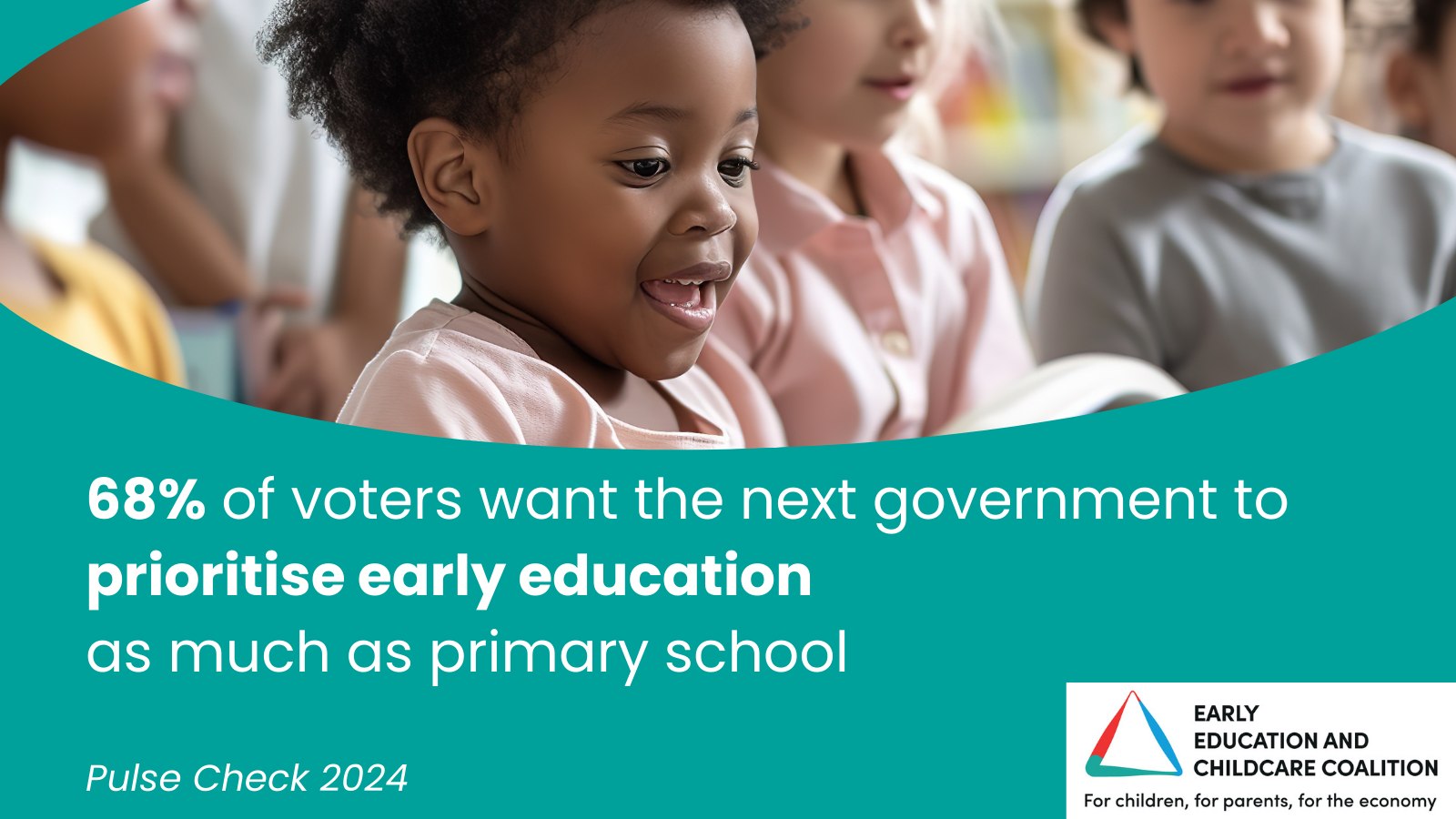
    Dingley’s Promise are proud to be part of the Early Education and Childcare Coalition. The recent EECC Pulse Check reflected that 68% of all voters think the next government should prioritise early education and childcare as much as primary school, with the same number saying more funding for early years would benefit the country in the long-term. We are committed to raising the voices of children, families, early years settings and local authorities to ensure that early years education is given greater priority by all decision makers and that children with SEND are given every chance possible of fulfilling their potential.


    • 68% of all voters think the next government should prioritise early education and childcare as much as primary school
    • The same number says more funding for early years would benefit the country in the long-term, while 44% think funding early education and childcare now would actually save the country money in the long run
    • 81% of parents of children under five are concerned about the availability of places in England
    • 80% of all voters think every child should be able to access a place in early education and childcare no matter where they live in the country


    Read the full pulse check findings here.

  • Dingley’s Promise Response to Coram’s 2024 Annual Childcare Survey

    Dingley’s Promise Response to Coram’s 2024 Annual Childcare Survey

    One of the most shocking statistics in Coram’s new Annual Childcare Survey is that only 6% of local authority areas believe they have enough provision in the early years for all children with SEND. This percentage has dropped sharply in the past year from 18%, which was already a major concern for us and for families of children with SEND. Sadly, at Dingley’s Promise we are not surprised at this decline, as settings and local authorities have been telling us on a regular basis that they are struggling to offer places to children with SEND as a result of the major pressures on the early years sector, despite being aware of their equality duties.


    To further exacerbate the current funding, recruitment and retention issues, the new early years entitlements are also now being rolled out. Unfortunately for children with SEND, when increases have been rolled out historically, they have led to a drop in available provision for children with SEND. Changes to ratios have been introduced to take the pressure off settings struggling to recruit but in reality, the impact of this is that settings feel even less able to support children with SEND, something that was highlighted as a risk in the Government’s Equalities Impact Assessment.


    Dingley’s Promise is working hard with the Department for Education to ensure children with SEND can access their early years entitlements in the same way that their peers do. We will soon release an update on our Manifesto for Early Years Inclusion that is driving forward changes that will help with the current issues. We agree with the Coram calls for an increase in early years SEND funding and simplified processes to access it. Specifically, Dingley’s Promise is calling for a delinking of Disability Access Funding from Disability Living Allowance, and ring-fencing of a percentage of the High Needs Block to fund support for children with SEND in the early years. We are also working on new early years SEND assessment guidance for the DfE. This guidance will give settings practical support and the tools to identify need and provide the information required for accessing funding. This will be designed to feed into the current two-year-old checks in a way that avoids duplication of information and effort.


    The upsetting reality is that families continue to be turned away from early years settings. In our own research in November 2023, one in five families of children with SEND reported being turned away by mainstream settings. The risk is that this will continue to increase in the coming months and years, with families losing trust in the education system at the very first stage. Without trust in the system, we will never be able to build a truly inclusive and supportive education system, to the detriment of our children as well as the economy and wider society.


    Given the significance of the issues around sufficiency, we are focused and committed to increasing confidence and knowledge in the existing workforce to help those working with children with SEND to work more inclusively. With this approach we can make a positive impact in settings and reduce the numbers of children with SEND being turned away. If you feel you could benefit from practical training to support your work in the early years, visit www.dingley.org.uk/training or email [email protected]

    Catherine McLeod – CEO Dingley’s Promise

  • CEO Catherine McLeod’s response to the government’s early years funding consultation update

    CEO Catherine McLeod’s response to the government’s early years funding consultation update

    Dingley’s Promise calls for better access to early years SEND funding

    Yesterday’s release of the government’s response to the early years funding consultation was an opportunity for necessary and immediate action to be taken to improve access to early years entitlements for children with Special Educational Needs and Disabilities. Recent research carried out by Dingley’s Promise regarding the introduction of under 2’s funding entitlements confirmed that 57% of settings believe they will not be able to take any more children with SEND when these changes come into force. This is at a time when one in five parents of children with SEND are already reporting they have been turned away from an early years setting.

    Whilst we recognise the important move to increase the eligibility to access SEN Inclusion Funding (SENIF) and Disability Access Funding (DAF) to more age groups, there are ongoing concerns around the challenges of accessing this funding. Access to DAF funding is dependent on the family having successfully applied for Disability Living Allowance (DLA); something that many families in the early years are not ready or equipped to do. With 48% of local authorities saying they are underspent on their DAF budgets, Dingley’s Promise believes that the link with DLA is having a negative effect on take up, something which must be addressed to make the funding process more accessible.

    Catherine McLeod MBE, Chief Executive of Dingley’s Promise reflects on the barriers:

    “Currently, when settings cannot quickly access funding to support children with SEND it becomes a barrier to inclusion. We must remove all barriers to accessing the funding needed, to enable settings to be more sufficient and confident of supporting children with SEND effectively, and to reduce the numbers of children being turned away”

    The Government’s response to the consultation acknowledges the current issues, stating: ‘As qualifying for DLA is contingent on a SEND diagnosis, there is a fear that many children will miss out due to the process involved in a child receiving a SEND diagnosis’. Yet despite this, the decision to proceed with the proposal to use DLA as the proxy for allocating DAF was maintained. Dingley’s Promise has raised this issue with the Department for Education, both as part of the consultation and on release of their response. We sincerely hope they will consider changing the current process to remove the barriers which prevent settings from effectively supporting our most vulnerable children in the early years.

    Response to funding consultation: https://assets.publishing.service.gov.uk/media/65670dd9312f40000de5d56c/Early_years_funding_-_Extension_of_the_Entitlements_Consultation_Response.pdf

    Dingley’s Promise Manifesto for Early Years Inclusion: https://dingley.org.uk/manifesto/

  • Dingley’s Promise statement on changes to the EYFS

    Dingley’s Promise statement on changes to the EYFS

    On October 27th 2023, the Government announced regulatory changes to the Early Years Foundation Stage (EYFS) after a national consultation. Dingley’s Promise were involved in the consultation, highlighting the need to consider the impact of proposed changes on children with SEND in the early years, both individually and as a member of groups such as the Special Education Consortium.

    The wide-ranging consultation included two proposals that concerned us greatly – the reductions to the number of Level 2 qualified practitioners, and the removal of qualification requirements outside of peak times. Research shows that the quality of provision – not the hours in a setting – is what gives children the best start, and for children with SEND this is especially important. With settings reporting they are already struggling to cope with the rising numbers of children with SEND, these proposals would have likely seen a further increase in exclusions, and so we welcome this news and recognise that the Government are listening to and acting on these important concerns.

    On the same day, the Government has also released its report on the impact of the 2021 changes to the EYFS, which recognises that while the changes have led to improvements in the quality of early years provision, there are real concerns about the unintended impact this has had on provision for children with SEND. We are working with the Department for Education on new guidance for settings and local authorities around assessment of children with SEND. Since the changes and the focus on reducing tracking of child development, the gap between the amount of paper work for children with SEND and their peers has grown significantly. As the early years sector struggles with a recruitment and retention crisis, this can lead to children with SEND being turned away from settings because of a lack of staff to fill in time consuming paperwork. We now need to establish guidance on understanding and supporting the needs of children with SEND using formats that are used by settings and accepted by local authorities who make decisions on providing funding for those children. This should not take away from the EYFS 2021 focus on spending time to really understand the child rather than filling in paperwork, but must enable high quality early intervention.

    In light of the progress on these important issues and the willingness of the Government to engage with the sector, we are hopeful that there will be significant improvements to early years inclusion for children with SEND in the coming months.

    Links:

    https://www.gov.uk/government/consultations/early-years-foundation-stage-eyfs-regulatory-changes

    https://assets.publishing.service.gov.uk/media/6537e5503099f900117f308f/EYFS_2021_Reforms_Evaluation_Report.pdf

  • Reflections on Coram’s Childcare Survey 2023

    Reflections on Coram’s Childcare Survey 2023

    With the release of Coram’s Childcare Survey for 2023, we are reflecting on the current situation in the early education and childcare sector for children with SEND. Coram’s research shows that in England, just 18% of local authorities say they have sufficient places for disabled children; less than 1 in 5. Urgent change is required to ensure that children with SEND are able to reach their full potential in the early years, providing them with the foundation to thrive as they grow up.

    Families of disabled children have already been hit hard by the pandemic and current cost of living crisis. The lack of early years provision for their children only exacerbates the inequalities they face. In a recent report from the Disabled Children’s Partnership (Failed and Forgotten, March 2023), 3 in 4 parent carers said they have had to give up employment (or their whole career) due to the lack of support available for their disabled child. Almost half answered that they are unable to work and are experiencing poverty. The cost of living crisis is having a huge impact on families, and the rising costs of childcare are yet another barrier faced by disabled children.

    Educational outcomes for children with SEND have been low in the early years for a while; in 2018/19, 76% of children with SEND did not achieve at least the expected level across all learning goals (compared to 24% for those children with no identified needs). The vast inequalities faced by disabled children are having a detrimental effect on their future, with only 1 in 5 families feeling that they receive the support needed for their child to fulfil their potential. The decrease in available childcare places will only widen the gaps between children with SEND and their peers.

    It does not come as a surprise that local authorities across the country are unable to provide suitable places for disabled children; in March 2022 the Early Years Alliance highlighted that many settings were struggling financially in regards to providing support for children with SEND. At that time 14% of early years provisions said that they expected places to be reduced going forward due to costs. The funding that many were receiving wasn’t adequate to provide the quality of care for children with SEND that they wished (87%), and 40% didn’t receive any specific funding towards SEND provision.

    Urgent reform needs to happen within the childcare sector; the rising costs of childcare demonstrated in Coram’s survey are disproportionately affecting children with disabilities both through the lack of places offered, and the impact that the cost will have on many of the families’ already bleak financial situation.

    Dingley’s Promise is committed to improving the future for children with SEND in the early years; with our specialist centres opening this year in new locations and our inclusion training programme ever expanding, we are working hard to build a more inclusive early education landscape that cultivates the development and potential of all children.


    Childcare Survey 2023 (Coram Family and Childcare, March 2023)

    Failed and Forgotten (Disabled Children’s Partnership, March 2023)

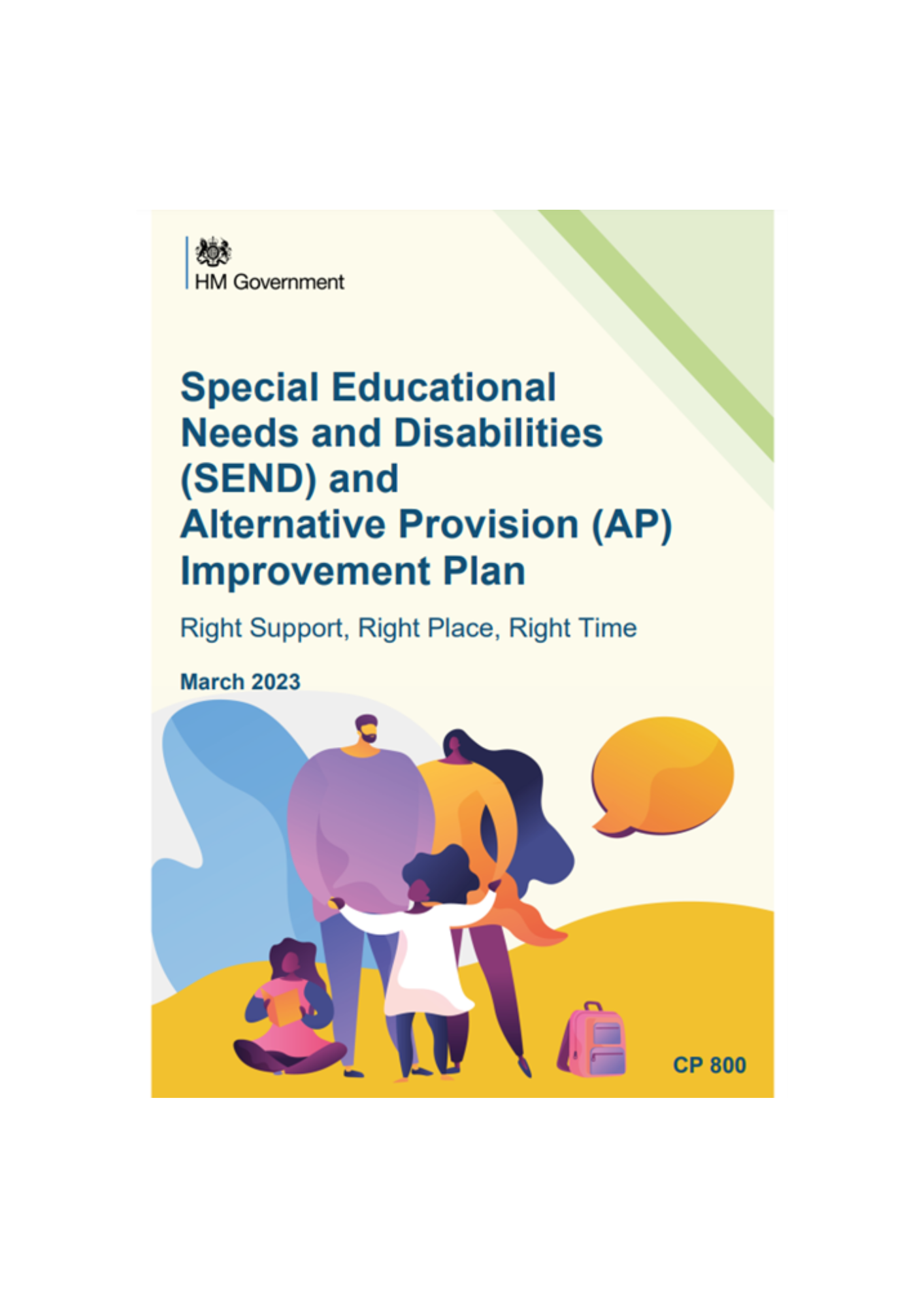
    Right Support, Right Place, Right Time – Government Consultation on the SEND and Alternative Provision System in England (March 2022)

    Too Little, Too Late – SEND Funding and the Early Years Sector (Early Years Alliance, March 2022)

  • Statement on Government’s SEND and alternative provision improvement plan

    Statement on Government’s SEND and alternative provision improvement plan


    2nd March 2023

    We welcome the release of the Government’s SEND and AP Plan, and are particularly happy that within this plan, early education is repeatedly acknowledged to be a key stage in the wider educational journey of every child.

    The Plan recognises ‘the important role of the early years sector in the early identification of needs and in building up effective working relationships with parents about their child’s needs’. Reflecting on the consultation process, the Government notes that ‘respondents highlighted the crucial role of high-quality early years support in preventing unnecessary escalation of need and providing children with a strong foundation for their future educational journey.’

    For the early years sector, this formal recognition of the vital role we play in providing the best start for children with SEND is crucial and we appreciate the actions taken by the government in response to requests for more details on the early years in the plan. We also welcome the news that the review of the Level 3 early years educator qualification is likely to see the addition of a section on SEND  which will  increase knowledge, understanding and confidence of all newly qualified early years practitioners to work inclusively.

    The key action linked to the early years is the commitment to provide more Level 3 Early Years SENCO training. While this is important, we agree with the view also expressed in the plan that ‘a whole-setting inclusive ethos improves the sense of belonging for those with SEND’. We would therefore encourage development of the  plan to incorporate inclusion training for ALL early years practitioners rather than focusing only on the SENCO.

    We welcome the inclusion of early years in other areas of the plan including; the focus on high quality early intervention, the creation of practice guidance, national standards, early years sufficiency data, transitions to school, Ofsted area inspections and funding.

    As a charity running early years specialist Centres across the country and delivering a vital service, we are concerned that early years is not mentioned in conjunction with strengthening AP provision. We would encourage the analysis of the use of independent specialist AP in the early years to understand whether this has similar benefits for children and families as it does later in the education system. If similar benefits are found, then there should also be a focus on supporting the development of more of this kind of provision in the early years.

    We are committed to supporting the development of the SEND and AP system as described in the plan, with a focus on ensuring that where the plan makes clear recommendations in relation to early years, these result in clear actions.

    This is an encouraging starting point for an improved SEND system that acknowledges the early years as a vital stage in all children’s development and recognises that early intervention is critical both for both children and families.

    Catherine McLeod – CEO Dingley’s Promise

    Read the Government plan in full here https://www.gov.uk/government/publications/send-and-alternative-provision-improvement-plan

  • CEO Catherine McLeod on Recruitment in the Early Years

    CEO Catherine McLeod on Recruitment in the Early Years

    Last night our CEO Catherine McLeod spoke to BBC News on behalf of Dingley’s Promise about staffing and recruitment in the early years. As a sector, recruitment and retainment is a huge issue, and the struggle to find and keep good staff is having a direct impact on children with special educational needs and disabilities (SEND). Families are being turned away from settings as they don’t have the staff to meet the child’s needs, contributing to the exclusion of children with disabilities and creating stress and anxiety for families with no support.


    “Early intervention is absolutely vital; the earlier we can understand their needs and how we can support them, the better life outcomes they will have”


    At Dingley’s Promise we recognise and appreciate the highly skilled nature of the early years workforce, however in the current climate there is a lack of funding for staff and the cost of early years settings across the country. The importance of early intervention needs to be recognised for the huge impact it can have for children with SEND; investment in the early years is life changing for children and their families. As part of the All Party Parliamentary Group, we are committed to speaking out on the challenges faced by children with special educational needs and disabilities, and will continue to push for positive change in the early years.